Training
Explaining the new world in simple words.
Hands-on courses on Audio/Video-over-IP – SMPTE 2110, NMOS, PTP, AES67 and Dante – for audio/video professionals and IT professionals alike. Join one of our public courses, or let us put together an in-house course that fits your team.
In-house courses – on request
A course built around your team
Our in-house courses are tailored to your people, your systems and your questions – with a strong focus on practice and plenty of tips and tricks from real projects. Focus and depth of each topic are flexible.
How a course is structured
- Network fundamentals – tailored to your audience. Before the course, participants prepare individually with 10 short video tutorials and a self-check questionnaire. A Q&A round at the start brings everyone to the same level before the audio/video-specific part begins.
- Synchronisation with PTP. From a 30-minute overview to half a day or a full day in depth – complete with hands-on switch and PTP grandmaster configuration.
- Connection management. NMOS and other approaches, including the relevant standards such as SMPTE 2110 and AES67 – compared with NDI and Dante on request. NMOS can be covered in principle or in full detail (IS-04/05, BCP-008 and the specifications beyond).
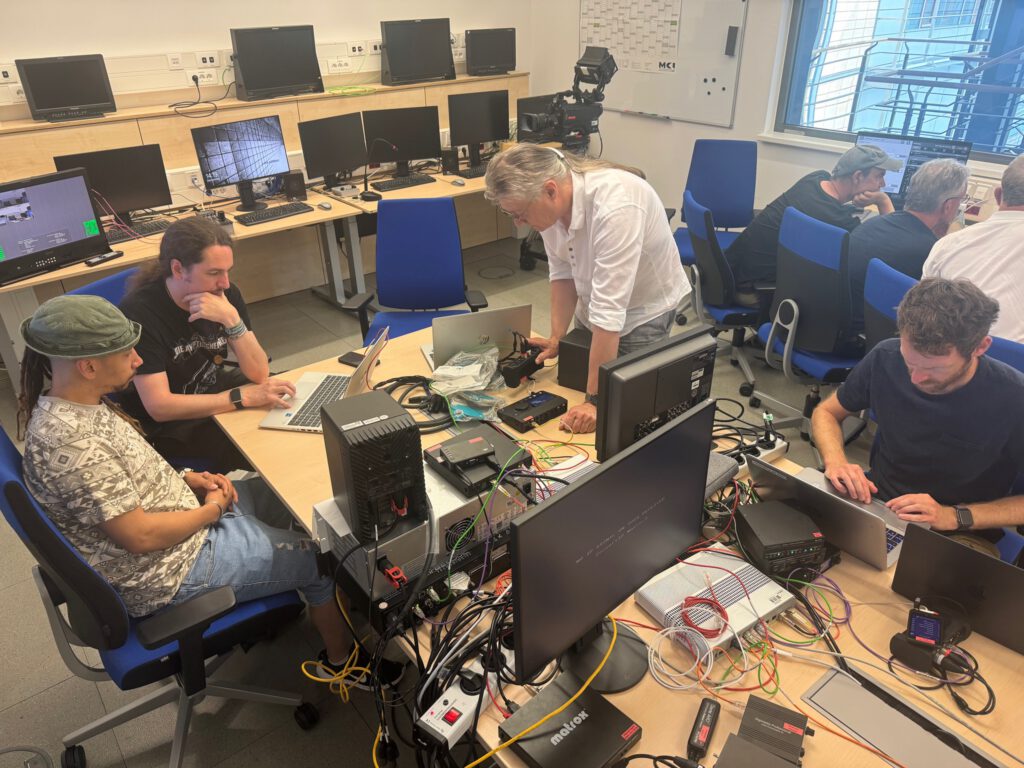
- Hands-on exercises. Participants sit down at different products and make audio/video connections themselves, acting as a “human orchestrator”: via NMOS control tools, via the products’ web pages, or even by copying transport files. We round this off with thoughts on system design, redundancy and tools.
If Dante, NDI or IPMX are relevant for your group, we pick them up throughout the course and keep comparing how they differ from the approaches discussed.
- Typically 2–4 days
- Up to 12 participants
- Flexible focus and depth
- At your premises
Topics we often cover
A selection. If a topic is missing, we are flexible enough to cover it – spontaneously or with individual preparation.
Introduction
- Why networks?
- Basic requirements for audio/video networks
- State of the industry
- Certification procedures
- Approaches to system control
IT fundamentals (refresher from the video tutorials)
- IT basics
- Advanced IT: multicast, IGMP/PIM, Quality of Service, link aggregation, software-defined networking and orchestration, Cisco IPFM/NDFC, Arista CloudVision/MCS
Connectivity on site
- Security
- Network zones
Synchronisation: PTP
- Concept
- Best Master Clock Algorithm (BMCA)
- Boundary and transparent clock switches
- Example PTP designs and best practice
- PTP over the WAN
Redundancy
- Stream redundancy with Dante and SMPTE ST 2022-7
- Link aggregation
- Rapid Spanning Tree Protocol (RSTP)
Audio on the network
- Why audio is more complex than video
- Data rates
- Streams and flows
- Standard packet formats
- Latency and phase accuracy
- Audio/video delay (lip sync)
Video on the network
- Uncompressed vs. compressed video
- Compression methods
Connection management
- Session Description Protocol (SDP)
Network technologies and standards
- Dante, RAVENNA, Q-LAN, Livewire+
- AES67
- SMPTE ST 2110
- IPMX
- NDI
Control protocols
- NMOS: registry and discovery with IS-04, connections with IS-05, user interfaces, automatic system parameters with IS-09, monitoring with BCP-008, tally with IS-07, matrix control with IS-08, sender/receiver formats with IS-11, general control with IS-12, backup/restore with IS-14
- SNMP
- Ember+
- Others (proprietary, e.g. Dante)
Hands-on exercises
- Steps to connect different devices
Dante in comparison
- Dante Controller as connection manager
- Insights into Dante Domain Manager
- Latency
- Stream formats
- Device and stream discovery (SAP)
- PTP v1 and v2
- Dante and AES67
Switch configuration
- Configuration notes
- Examples: Cisco SG-300/350, Cisco Nexus, Arista
Troubleshooting and tools
- Approaches and tools for finding faults in real systems
Preparation videos
What the 10 preparation videos cover
- Introduction: About the trainer and the concept of the videos · why it is worth tackling the additional complexity · the paradigm shift to packet-based transmission · differences from streaming at home
- 1 – Network overview: Topologies (star, ring, bus, spine/leaf) · end devices and audio/video gateways · switching devices · requirements for audio/video connections: connectivity, synchronisation, connection management
- 2 – Packets and addresses: Pros and cons of packet-based transmission · packet structure · NAT · link, IP and MAC addresses · fixed, DHCP and zero-config addressing · important address ranges
- 3 – Subnets: What is a subnet? · subnet mask and IP address · sending packets within a subnet and via a router · device network settings · network and broadcast addresses
- 4 – Subnet exercises: Ping as a test tool · demos and examples
- 5 – OSI model: The OSI layers explained with a postal analogy · WAN and LAN · pros of layer-3 and cons of layer-2 audio/video networks · benefits of standards-based transmission
- 6 – Virtual LAN (VLAN): What is a VLAN? · difference from subnets · trunks · security: combining VLANs and subnets
- 7 – Unicast and multicast: Why unicast falls short for audio/video · reduced load with multicast · multicast addresses · IGMP snooping · SDN and orchestrators
- 8 – Quality of Service and bandwidth: Prioritising audio/video packets · DSCP values · effects of packet loss · link aggregation
- 9 – Redundancy: Link aggregation · Spanning Tree · stream redundancy with SMPTE 2022-7
- 10 – Packetising professional audio/video: What is a stream? · overhead vs. payload · MTU · packetising video and audio · packet time · minimum transmission delay
The videos are rounded off with a self-check questionnaire. Participants who already have the expected knowledge can skip the corresponding videos.
Plan your course
Tell us what your team needs
We will put together a proposal that fits your team. These questions help us get started – a rough idea is enough:
- Who will attend, and what is their background – audio/video, IT or both?
- Which topics and technologies matter most – e.g. SMPTE 2110, NMOS, PTP, AES67, Dante, NDI or IPMX?
- Which systems and products do you work with?
- How many participants, and roughly when and where?
Public courses
Upcoming courses
Open to everyone. Registration is handled by the organiser.
ARD.ZDF medienakademie · Nürnberg, Germany · 4 days · in German
SMPTE 2110 und NMOS zum Anfassen
- 3–6 November 2026
- 16–19 February 2027
- 15–18 June 2027
A hands-on introduction to SMPTE ST 2110 and NMOS on a live demo network: network fundamentals, Wireshark, PTP synchronisation, NMOS discovery and connection management, switch configuration and tips from practice.
menzi ebz · Horgen, Switzerland · 3 days · in German
Mediennetzwerk
- 1–3 December 2026
A vendor-independent, hands-on course on building, configuring and running media networks for audio, video and lighting – Dante, AES67/RAVENNA, NDI and SMPTE 2110/IPMX, with devices from many manufacturers.
menzi ebz · Horgen, Switzerland · 1 day · in German
Mediennetzwerk – Masterclass
- 4 December 2026
The follow-up day for graduates of the «Mediennetzwerk» course: no more theory, just hands-on practice with devices from many manufacturers and real network scenarios – and systematic troubleshooting.
ARD.ZDF medienakademie · Nürnberg, Germany · 4 days · in German
PTP (Precision Time Protocol) – Synchronisation zum Anfassen
- 22–25 February 2027
PTP in broadcast operations – versions, profiles, clock distribution and redundancy. Commissioning, monitoring with Wireshark and TrackHound, and troubleshooting on live demo networks with 2110 devices.
ARD.ZDF medienakademie · Nürnberg, Germany · 4 days · in German
SMPTE ST 2110 komplettiert: Steuerung mit NMOS zum Anfassen
- 21–24 June 2027
Control architectures, orchestration approaches and the open NMOS standard in real IP-based facilities – with hands-on work on IP demo networks and typical pitfalls from real projects.
Impressions
From the classroom
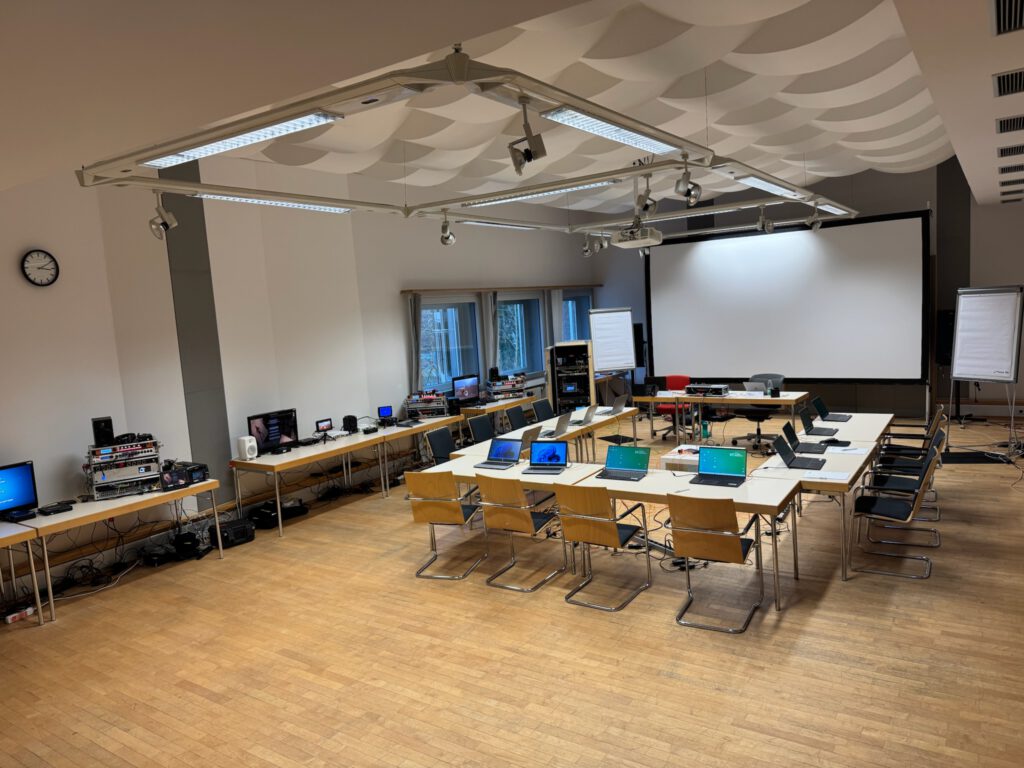
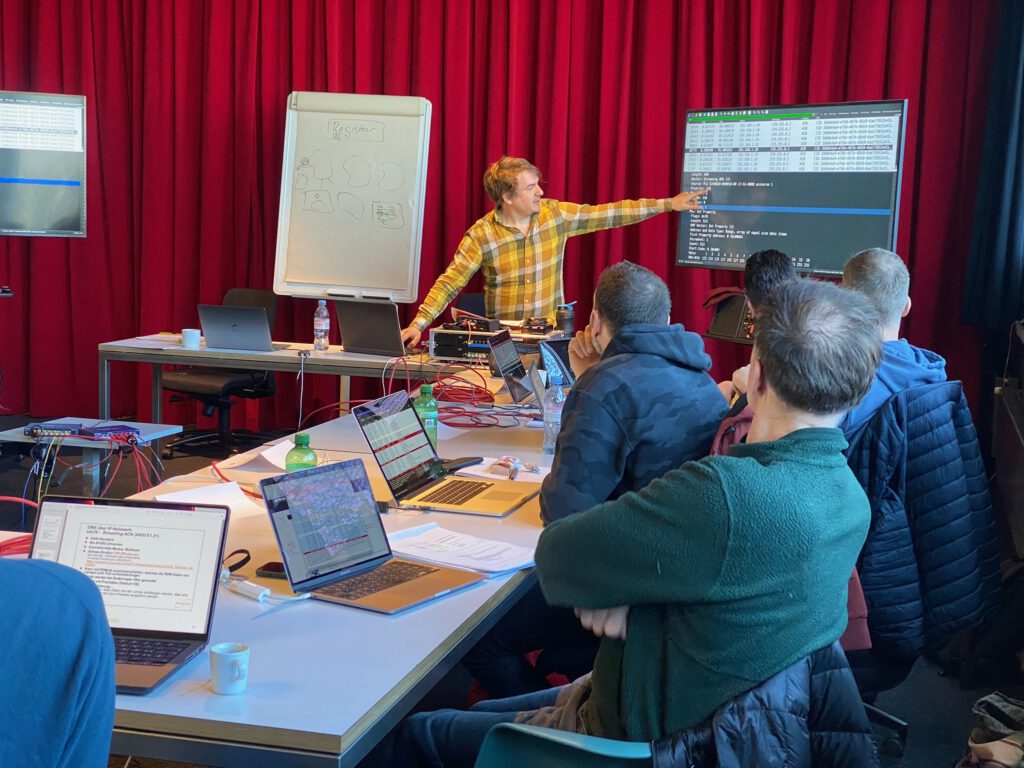
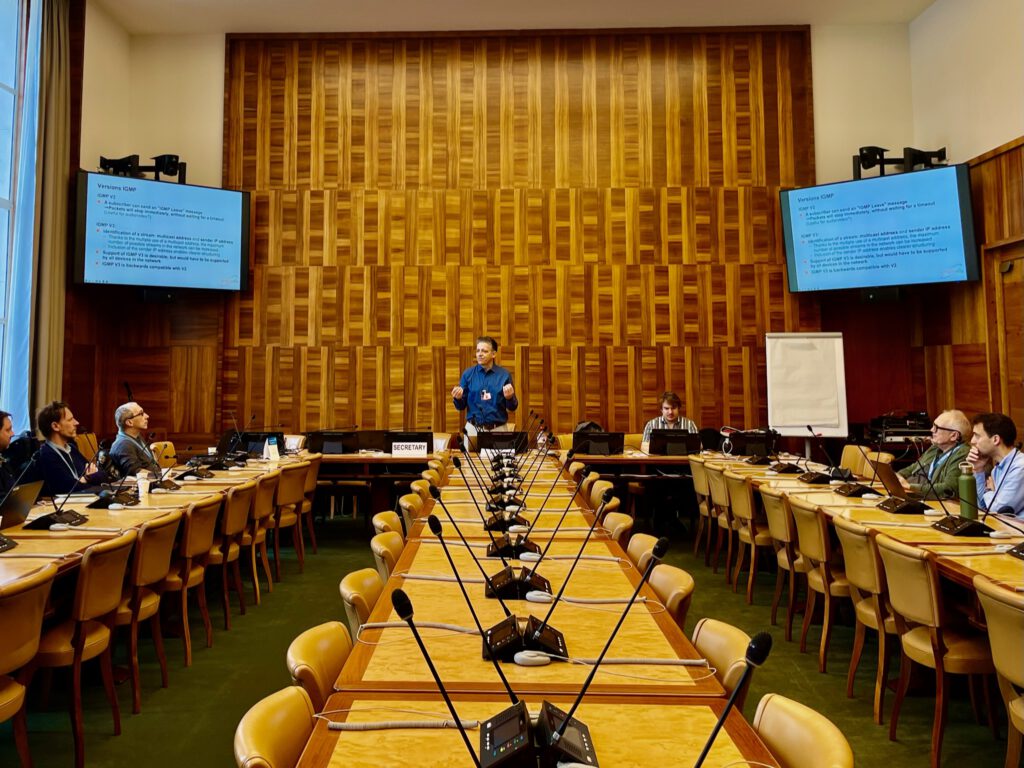
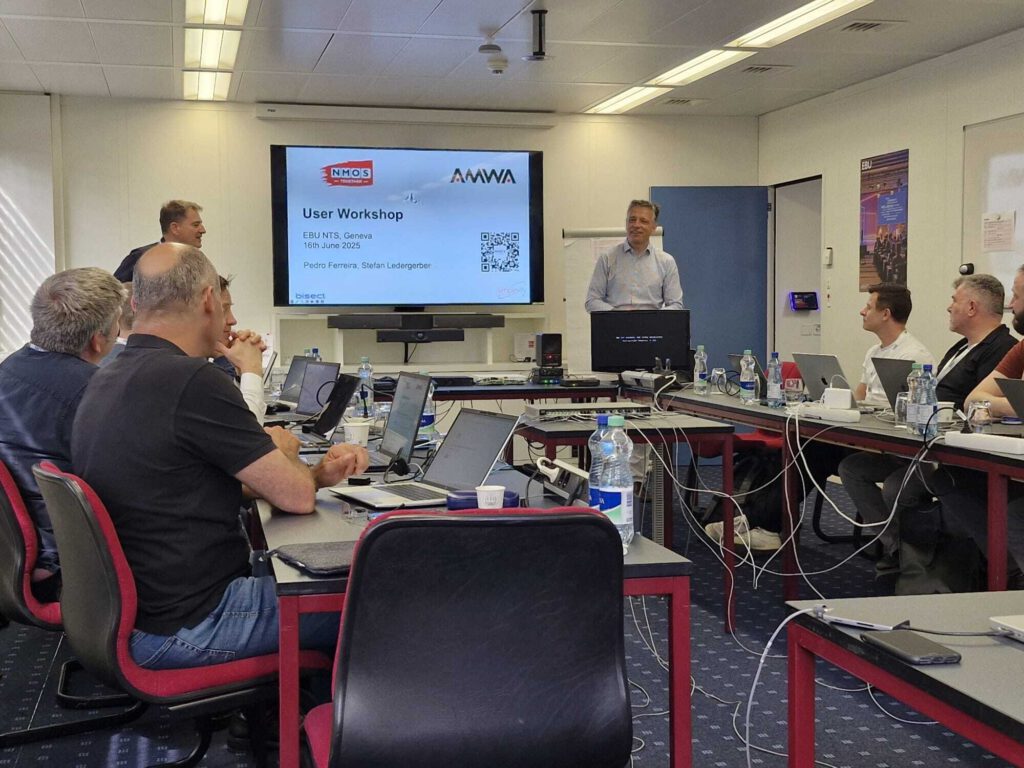
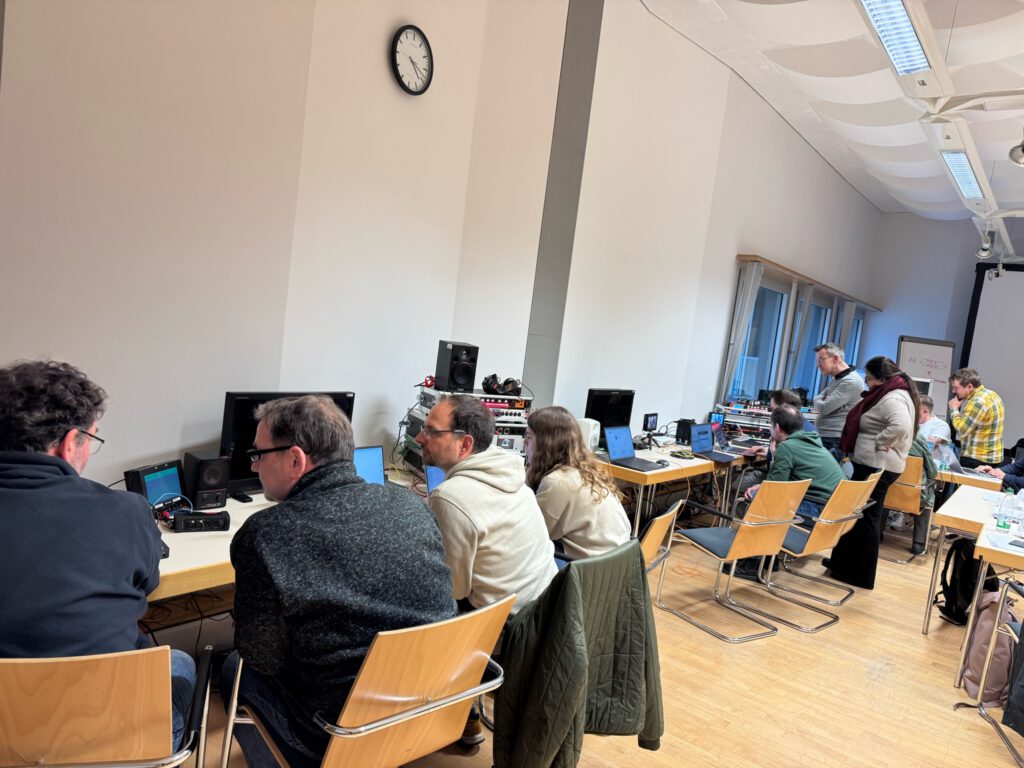
Theory, demos and plenty of hands-on work on real devices.